 SUBSCRIBE


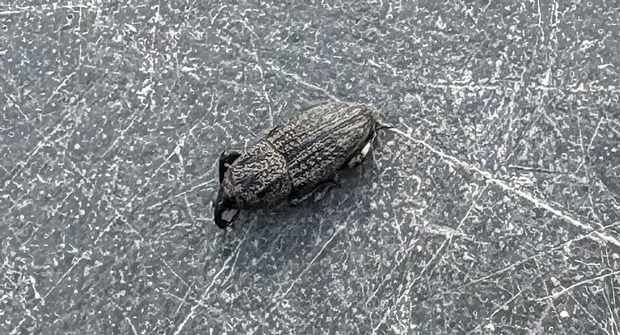

Annual bluegrass weevils (ABWs) are originally a northeastern bug that find themselves popping up around more parts of the country, spreading further into the Midwest and Transition Zone.
They’re a tricky insect for lawn care operators to deal with, so Landscape Management talked to Nathan Nordstedt, Ph.D., technical services manager at Quali-Pro, about how to identify and treat this far-reaching foe.
For more information on ABW life cycles, scouting, biology and control methods, be sure to register for Nordstedt’s upcoming webinar, “Building Your Annual Bluegrass Weevil Program,” on March 5 at 2 p.m. EST.
LM: What are annual bluegrass weevils, and how can lawn care operators identify them?
Nordstedt: ABW is one of the most destructive insect pests of short-mown cool-season turf in the Northeast and Mid-Atlantic, with increasing reports throughout the Midwest and parts of the transition zone. As the name suggests, they primarily feed on and damage annual bluegrass. While ABW can also affect creeping bentgrass, this usually only occurs under heavy pressure.
Adult ABWs are small; about one-eighth inches long, tannish-black beetles that mature to jet black and have a short, curved snout similar to billbugs. They’re often mistaken for other small beetles, but their small size is a helpful clue for identification. The most reliable way to scout is to observe adults migrating across turf in early spring or use soap flushes to bring them to the surface for counting.
LM:What damage does ABW cause to the turf, and when in the year does damage usually occur?
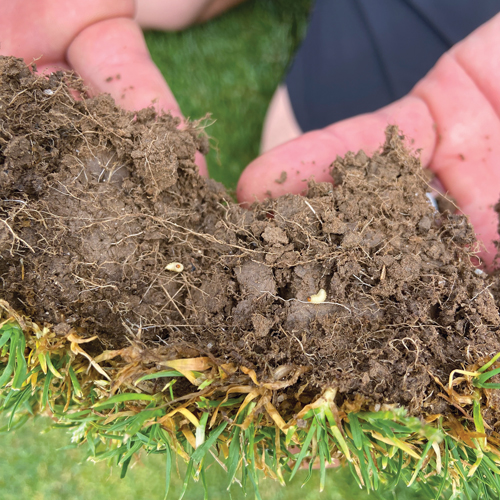
Nordstedt: Most ABW damage is caused by larvae, not adults. Early instar larvae feed inside the grass stem, which disrupts vascular tissue and often shows up as wilted or stressed patches that can be mistaken for localized dry spot. As larvae develop, they move into the crown and roots, which causes the most severe damage and leads to thinning, yellowing and dead turf.
Damage usually begins in late spring after adults lay eggs, but it can continue into summer as additional generations develop.
LM: What are some control options you recommend to handle ABWs?
Nordstedt: The most effective strategy is a preventive application targeting migrating adults in early spring. This timing can be predicted using growing degree days, typically 120-170 GDD (base 50 degrees F, starting March 1), or by watching for forsythia shrubs when they are half gold and half green. Scouting along turf edges can also help confirm adult movement.
First application should ideally be an insect growth regulator (IGR) that impacts multiple life stages. Suprado (novaluron) is a strong foundational product because it disrupts larval development and reduces egg viability, leading to broad population suppression.
About three weeks later, a follow-up application with an ingestion-based insecticide is recommended to target later instar larvae feeding in the crown. Doxem T&O (indoxacarb) fits well at this timing and adds a second mode of action for resistance.
In high-pressure areas, a second adult-targeted Suprado application during the next migration can provide additional control.
LM: Are there any mistakes LCOs can make when controlling or identifying ABWs?
Nordstedt: One of the biggest mistakes is simply not realizing ABW is present. Without proper scouting, damage is often misdiagnosed as disease, drought stress or other insect problems, especially early in the season. Another common issue is treating too late, once larvae are already established inside the crown. There’s also a tendency to rely heavily on pyrethroids because they’re familiar and provide quick knockdown, but this usually leads to short-lived control and contributes to resistance problems.