 SUBSCRIBE


The dog days of summer are here, and with that comes a slew of extra problems that can plague lawn care operators (LCOs) on the job.

Besides the sweaty, sunny conditions that can bog LCOs down, issues start arising in the turf itself and in the applications made to correct them. Drought and turf stress start to prevail, and herbicides start losing their effectiveness.
“Once the turf goes through a period like this, it stresses out, and you begin to lose some turf — particularly in cool-season grasses — due to the hot weather,” says Jay Wyrick, turf and ornamental account manager for Orion Professional Turf Products (formerly with FineTurf in North Carolina). “I think the weeds become more prevalent because Mother Nature’s trying to fill a void and close those holes up.”
Heat hurts
In the summer, many grasses and weeds slow their metabolism and growth to conserve energy, while other undesirable plants like crabgrass can thrive. This can throw typical application processes out of whack, especially since herbicide efficacy usually drops when weeds are faced with the heat.
“If you’re not getting enough moisture from rainfall, your herbicide efficacy can be less because the weed itself is not willing to uptake that herbicide active ingredient,” Wyrick says.
Wyrick’s second biggest issue with making applications is that the high heat with an herbicide spray can result in turf burn, especially as temperatures climb to 85 degrees F and above. With grass already stressed and some herbicides becoming more volatile in the heat, unintended injury and even evaporated chemicals moving onto non-targeted areas is possible.
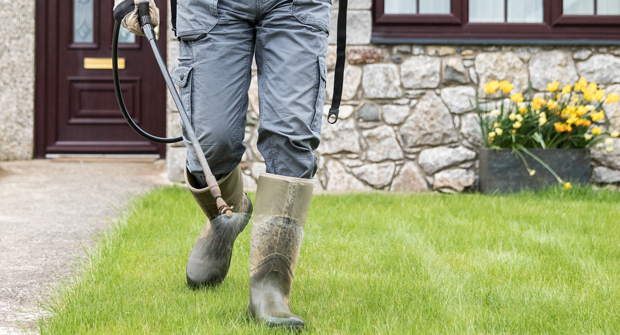
Outside of the applications themselves, the warm summers also pose challenges to technicians and LCOs. Technicians should already be wearing personal protective equipment — including rubber boots, long clothing and/or a protective hat — and combined with temperatures nearing 100 degrees F or more, Wyrick says staying hydrated and taking cooling breaks is crucial.
“One thing I always used to preach … is to start drinking water the night before to hydrate. Stay away from the sugary sodas and the Big Gulps at the convenience store during the day,” he recommends. “If you can do those two things, that will reduce cramping, and it’ll reduce (dehydration).”
Save your summer
When trying to deal with summer herbicide problems, Wyrick says the first and most important step is to always read and follow the chemical’s label. Not only is it the law, but it will tell you what temperature range the product can be applied and stored in.
Another key tip when the temperatures soar is to swap from ester-based products (more oily) to amine herbicides (more water-based). Wyrick says amine products are less likely to burn turf or have vapor drift onto nearby plants, making them better for the warmer seasons.
One of Wyrick’s biggest suggestions is to use more wetting agents in lawn care, something he thinks the industry as a whole should be shifting toward. Proper use of them can maximize water and irrigation efficiency, eliminate localized dry spots, improve nutrient absorption and promote deeper root growth.
“I think it’s something we, as an industry, need to probably start doing more of. Golf does it quite a bit; it’s something that they use on a regular basis,” Wyrick says. “On our side of things, a lot of the wetting agents have to be watered in. There are one or two that do not require watering for them to start taking effect, which is a good thing, because not every homeowner or residential property or commercial property is going to have irrigation.”