 SUBSCRIBE


Expert landscaping consultants’ services are in higher demand as soil quality decreases, water scarcity rises and homeowners struggle to keep their grass green and their gardens luscious.
Implementing a few key landscaping strategies will ensure yards and gardens are drought-resistant and efficiently irrigated, helping you attain that water management balance.
Selecting native plants
Many people outside the landscaping industry do not realize that native plants have a naturally higher drought tolerance. These plants have adapted to the local climate, which allows them to reduce water and pesticide demands.
Landscapers should prioritize leveraging native varieties and educating homeowners on why native plants are best for their climate. There are plenty of options for aesthetic variations throughout seasons and safer ways to grow non-native varieties, like planters to enhance drought tolerance.
Of course, native plants also boost landscaping productivity by discouraging invasive species and sheltering local wildlife, which deters pests. Simultaneously, their extensive root systems help raise defenses against disease and infestations.
Embracing and marketing xeriscaping
Despite perceptions that xeriscaping is dated, changing climates make this irrigation-reduced landscaping method a smart, eco-friendly strategy. By using smart sprinklers and drought-tolerant plants, professionals can cut water consumption and improve soil composition.
As mentioned, native plants naturally integrate into xeriscaping. Additionally, several species, such as cactuses and mustards, have lower water requirements by default. Planting these can coincide with removing non-native grasses. To complement these strategies, it’s vital to refocus efforts on identifying species’ soil impact by doing pH and nutrient analyses and educating clients on the value of continuing to do so themselves.
Finally, xeriscaping is still about bending down and clipping plants instead of mowing, which enables robust plants that hold a lot of water and nutrients to thrive.
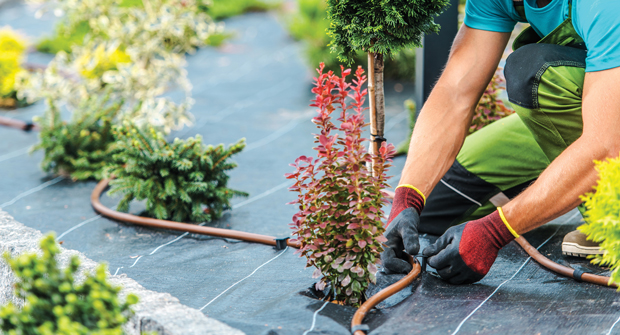
Using drip irrigation systems
Irrigation is a major consideration when drought-tolerance is top of mind. Many still insist that a drip irrigation system that waters plants at their roots is a great way to minimize water usage. Multiple water-collection resources, such as rainwater harvesting barrels, also remain widely used among conservationists.
Smart controllers have optimized irrigation, leveraging advanced equipment technology to automate water usage. This technology automates watering schedules and adjusts them based on incoming weather conditions, whereas previous systems switched on and watered the same amount regardless of changing conditions. Smart irrigation systems can also detect leaks, notifying clients.
Integrating hardscaping
Hardscaping saves water by reducing irrigation needs. Invest in permeable pavers to reduce runoff or ponds for water recycling.
More recently, landscapers are also considering what materials they are using to align with LEED certification standards. The U.S. Green Building Council endorses LEED certification in landscaping and in building more eco-friendly structures. Hardscaping according to LEED standards impacts the bottom line, including tax rebates and lower utility and maintenance costs.
Hardscaping elements like pathways and barriers direct runoff to improve irrigation efficiency while anchoring soil and protecting plants from damaging winds.
Improving soil quality
Climate change, pollution and temperature shifts have stripped soils of vital elements that support species. Healing the ground makes it more nurturing.
Supplementing the earth with materials like nutrient-dense compost can enhance its water retention and reduce consumption. Even a 1-percent boost of soil organic matter can enable one acre to hold 20,000 gallons more water.
Inexpensive drought-tolerant landscaping could also include other installations to preserve soil quality. Adequate mulch cover reduces evaporation, and ground covers regulate temperatures to keep microbes flourishing.
Clients may resist low-irrigation landscapes, so lead with the benefits. Highlight bottom-line perks like lower utility bills and rebates, plus healthy ecosystems.