 SUBSCRIBE


By the time summer is in full swing, most irrigation systems have already been running at full capacity for weeks. Schedules are set, crews are busy and landscapes are expected to perform despite rising temperatures and inconsistent rainfall.

But mid-season is exactly when many systems begin to drift out of optimal performance, often without immediate visibility. That’s why a mid-season irrigation audit isn’t just a best practice, it’s a strategic checkpoint.
While spring startups focus on getting systems online, a mid-season audit ensures they’re working as intended under real-world conditions. It’s an opportunity to identify inefficiencies, correct unnoticed issues and make proactive adjustments before they affect plant health, water usage or customer satisfaction.
Why mid-season matters
Early in the season, irrigation systems are often set based on assumptions — weather averages, historical data or standard programming. But as the season progresses, variables change. Soil conditions shift, plant material matures and environmental stress increases.
Without adjustments, even a well-designed system can become inefficient.
A mid-season audit gives contractors and facility managers a clear picture of how the system is actually performing. More importantly, it allows them to align irrigation output with current needs, not what was predicted three months ago.
This is especially critical in today’s environment, where water conservation and cost management are under increased scrutiny. Small inefficiencies, when left unaddressed, can compound quickly across a property. A few misaligned heads or minor leaks may not seem significant in isolation, but over the course of a month, they can quietly waste thousands of gallons of water.
What to look for during an audit
A mid-season irrigation audit doesn’t have to be overly complex, but it should be intentional. The goal is to evaluate performance, not just functionality.
Start with coverage and distribution. Are all zones delivering water evenly? Are there dry spots or oversaturated areas that weren’t apparent earlier in the season? Changes in plant growth or minor shifts in equipment can impact spray patterns more than expected.
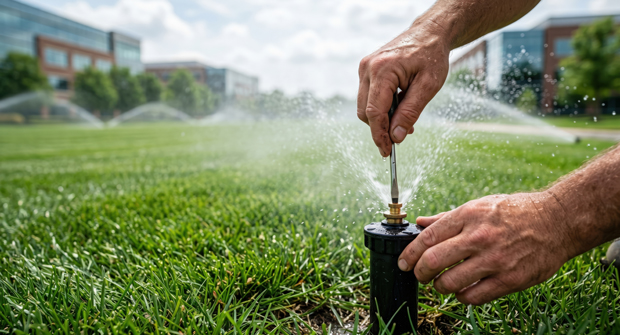
Next, evaluate system components. Nozzles, heads and valves should be inspected for wear, clogs or misalignment. Even small issues, such as a partially blocked nozzle, can significantly affect distribution and efficiency over time.
Controller settings are another key focus area. Reviewing and adjusting schedules based on current weather patterns and site conditions can improve both performance and water usage.
It’s also important to check for leaks or pressure inconsistencies. These issues are often easy to overlook but can lead to wasted water and uneven irrigation.
Balancing performance and efficiency
One of the biggest misconceptions about irrigation optimization is that improving efficiency means reducing water at all costs. In reality, it’s about applying the right amount of water in the right place at the right time. A mid-season audit helps strike that balance.
For example, increasing run times in one zone may improve turf health, while reducing output in another prevents overwatering and runoff. The goal is to maximize the gallons of water that are available not only through uniformity, but efficiency as well.
Understanding how different landscapes respond to irrigation and making targeted adjustments accordingly can have a measurable impact on both visual outcomes and operational efficiency.
Creating long-term value
Beyond immediate improvements, mid-season audits contribute to long-term system performance.
Routine evaluations help extend the lifespan of irrigation components by catching wear early. They also provide valuable insights that can inform future system designs, upgrades or retrofits.
For contractors, audits create an opportunity to demonstrate expertise and strengthen client relationships. For property owners, they offer reassurance that systems are being actively managed — not simply set and forgotten.
A proactive approach to peak season
The busiest time of year is often when it’s hardest to step back and evaluate performance. But that’s exactly when it matters most.
Mid-season audits don’t need a complete redesign or downtime — just a proactive mindset focused on efficiency and long-term results.