 SUBSCRIBE


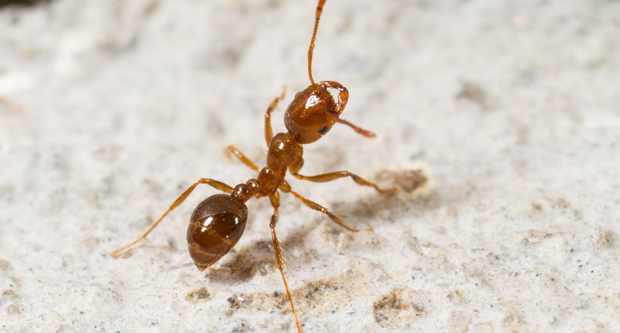
Few pests generate more customer concerns in Southern warm-season lawns than fire ants. Their painful stings, rapidly expanding mounds and ability to infest nearly any property make them one of the most frustrating pests for lawn care professionals.
When fire ants appear, the instinct is often to reach for a contact insecticide to eliminate visible mounds. While contact treatments work in certain situations, they frequently only address the symptoms of the problem rather than the source. That’s why fire ant baits should be the foundation of every fire ant management program.
Why Fire Ants Are So Difficult to Control
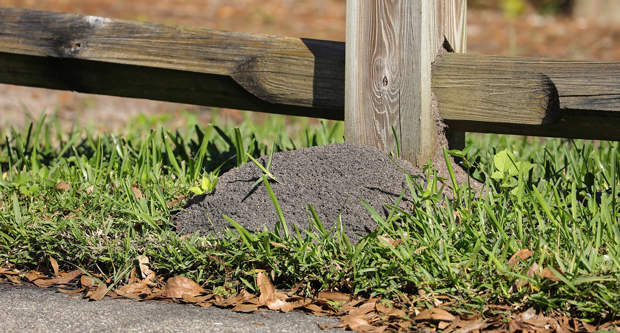
A fire ant mound is much more than the pile of soil you see on the surface. The majority of the colony exists underground and can contain hundreds of thousands of ants, including workers, brood and, most importantly, the queen. As long as the queen survives, the colony survives.
Eliminating worker ants around a mound may temporarily reduce activity, but if the queen remains healthy, the colony quickly recovers or simply relocates to another area of the property. That’s why effective fire ant control requires eliminating the entire colony.
Why Baits Work Differently
Unlike contact insecticides, baits take advantage of fire ant behavior. Foraging worker ants collect the bait granules and transport the bait back to the colony, where they share the food with other workers, developing brood and the queen herself. Instead of controlling only the ants that contact the treatment, baits deliver active ingredients directly into the heart of the colony. This approach allows operators to eliminate the queen and achieve much more complete and longer-lasting control.
Broadcast Applications Beat Chasing Mounds
Another common mistake is treating only the mounds that are visible. The problem is that many colonies may be small, newly established or difficult to detect. Treating individual mounds often turns into an endless cycle of reacting to new infestations.
Broadcast bait applications offer a much more proactive approach. By treating the entire lawn, foraging ants encounter the bait wherever they are active, helping control both visible and newly forming colonies before they become major problems. For lawn care operators, broadcast applications can significantly reduce callbacks and improve overall customer satisfaction.
Timing Matters
Baits are most effective when fire ants are actively foraging. Applications should be made when the ground is dry and ants are actively searching for food. Early morning and evening are often ideal periods of activity, particularly during the hottest parts of summer. Avoid applications when rainfall or irrigation is expected shortly after treatment, as moisture can reduce bait attractiveness and performance.
Because fire ants remain active throughout much of the year across the southern United States, bait applications can provide valuable control during multiple periods of the season.
Building a Foundation with Doxem Plus Fire Ant Bait
Doxem Plus Fire Ant Bait was developed specifically to provide season-long control of difficult fire ant populations. It combines three complementary modes of action — indoxacarb, novaluron and pyriproxyfen — to target multiple life stages within the colony while eliminating the queen and preventing re-establishment. Doxem Plus Fire Ant Bait can provide up to 90 days of fire ant suppression and helps prevent new mound formation.
The flexibility of the product is equally important. Doxem Plus Fire Ant Bait can be applied as a broadcast treatment across an entire lawn or used for individual mound treatments when needed. Its low use rate and ready-to-use formulation make applications simple and efficient for lawn care operators managing large service routes.
Think Colony, Not Mound
Successful fire ant management starts with a shift in mindset. Instead of chasing individual mounds as they appear, focus on eliminating colonies before they become established.
Baits make this possible by turning the ants themselves into the delivery system, carrying the treatment directly to the queen and the rest of the colony. By incorporating broadcast bait applications into a proactive management program, lawn care operators can deliver longer-lasting control, reduce callbacks and help customers enjoy their lawns without the constant threat of painful fire ant encounters.
Visit Quali-Pro.com to learn more.