 SUBSCRIBE


You’ve spent plenty of time and effort making a customer’s backyard a true showpiece. Innovative hardscapes. Attractive and site-appropriate plantings. Maybe you included an outdoor kitchen, a children’s play area or a fire pit. Everything screams “success.”
And then it rains … a lot. And both you and your customer realize there are drainage issues that need to be addressed immediately so they don’t turn a dream project into an ongoing nightmare.
The simplest solution is often a French drain. Known by other terms — a drain tile, a weeping tile or even a trench drain — the purpose of a French drain is fairly straightforward. These solutions collect and redirect water away from an area or a structure. There are other options available to solve these pesky issues, including an infiltration trench, which captures water where it is and allows it to soak into the soil instead of being redirected elsewhere.
It’s important to deploy the correct solution for your particular circumstance. In some instances, installing a French drain instead of an infiltration trench can violate municipal codes. In others, choosing the wrong drainage solution for the soil conditions present on the site can almost guarantee failure once the rains start falling again.
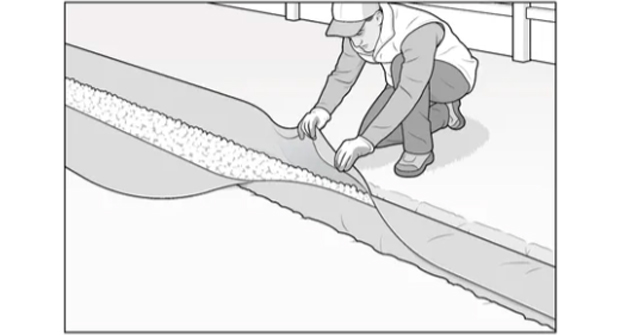
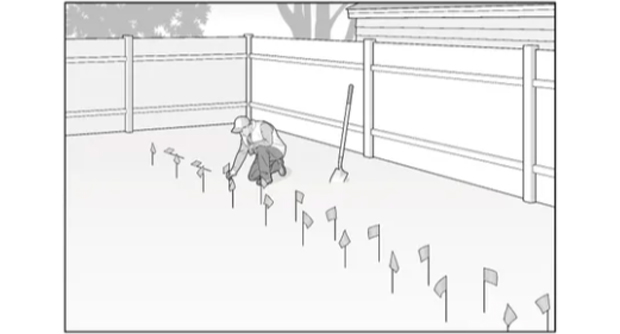
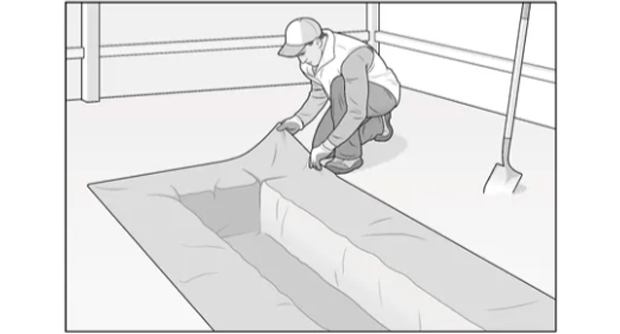
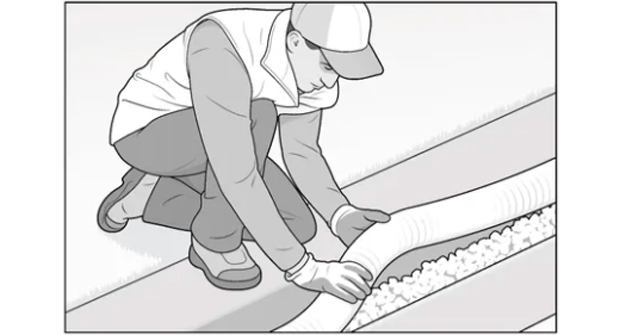
But when the time and place is right for a French drain, the installation process is often as straightforward as its purpose, as this month’s Step by Step demonstrates.
STEP 1:
STEP 2:
STEP 3:
STEP 4: