SUBSCRIBE


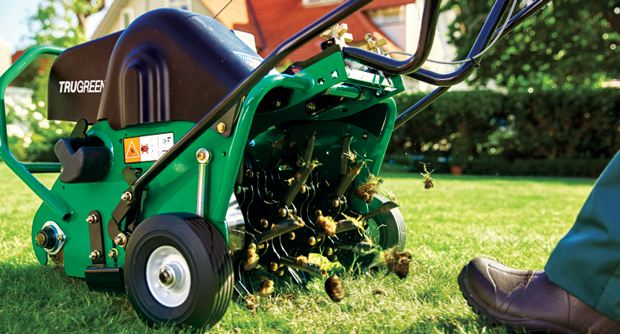
Aeration services are one of the most beneficial ways to deal with problematic turf. Specifically, core aeration addresses soil compaction, excessive thatch accumulation, poor water infiltration and restricted root growth.
But with how critical this service can be, there are plenty of mistakes that can reduce the effectiveness of each pass across the lawn, and many lawn care operators (LCOs) don’t fully capitalize on the revenue aeration can generate.
Timing tips
Brian Feldman, senior director of technical operations and lead agronomist at TruGreen, says the lawn itself can indicate when aeration is needed. LCOs should look for compact turf that is hard to penetrate with a soil probe, water puddling or runoff, thin turf even after fertilization and visible thatch accumulation.
But aeration timing should occur based on the turf type. Cool-season grasses should be treated in the spring or fall, and warm-season grasses are best served in late spring to summer.
“Aerate proactively before compaction and thatch become severe problems,” Feldman says. “Timing should always correspond with active turf growth so the lawn can recover quickly.”
And before aeration begins, Feldman recommends conducting a pre-service site inspection to prevent costly equipment damage and property repairs. Key actions include mowing the lawn, lightly irrigating extremely dry soils the day prior, marking irrigation heads and other underground hazards and removing any debris.
Plus, ensure the aerator’s tines are sharp and the machine is well-maintained. Worn tines don’t penetrate deep enough to fully alleviate compaction.
A+ aerating
When aerating begins, it’s important to get the details right to optimize the results, such as with travel speed.
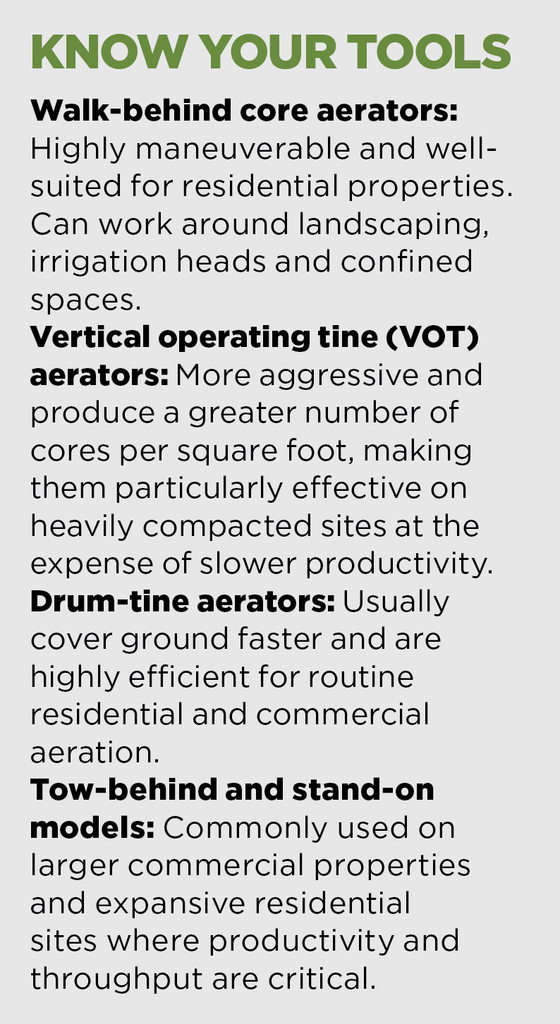
“Maintain a consistent, controlled travel speed to maximize plug extraction and penetration depth,” Feldman recommends. “Strive for thorough coverage across the entire lawn. … For aeration/overseeding projects, aim for approximately 16-20 cores per square foot to achieve strong seed-to-soil contact.”
In areas with higher compaction, Feldman says to increase the number of passes with the aerator.
“For difficult compaction issues, multiple passes in differing directions often provide superior results compared with a single pass,” he says.
Maximize the money
Once your aeration practices are strong, now is the time to bundle that service with others, further improving turf quality and revenue generation.
“One of the biggest misconceptions in the industry is viewing aeration as a standalone service,” Feldman says. “The greatest results occur when aeration is integrated into a comprehensive turf management program that includes proper mowing, fertilization, irrigation and overseeding practices.”
Overseeding and aeration are “natural partners,” according to Feldman, with the holes created during aeration improving seed-to-soil contact and providing protected microsites for germination. Applying fertilizer after aeration can better move nutrients into the root zone.
Lime or sulfur applications to adjust soil pH are also simpler thanks to aeration’s holes, and topdressing can improve soil structure and organic matter content.
“Combine aeration with overseeding, fertility and soil improvement programs for maximum return on investment,” Feldman says.