 SUBSCRIBE


We’ve been busy in the National Association of Landscape Professionals government relations department. That’s by no means a complaint. I think I’m on safe ground saying we all have smiles on our faces and springs in our step.

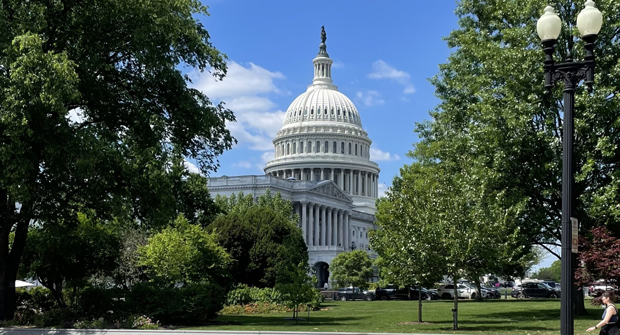
The four of us on the team have been spending a lot of time on Capitol Hill — even me! — trying to move the needle on a pair of intractable points of policy: the H-2B guest worker visa program and state preemption of pesticide regulations. I suppose if you happen to be a political science major in college, you’d look at these two issues and run for the hills. But, at least for me, the layers of complexity are absolutely fascinating.
I took a look at the latest congressional approval poll numbers before starting this column. As of today, 86 percent of Americans polled disapprove of the job that Congress is doing. Ten percent approve (which must represent just the moms and dads of our elected officials). The press would have you believe that our nation is deeply divided. Well, it seems that we’re pretty much unanimous on what we think of our representatives and senators, so there’s still hope.
However, perception isn’t always reality, is it? Here’s a great example: We had great success in including our state pesticide preemption language in the current farm bill. It was one of three pesticide-related amendments to the bill, each of which had some overlap with the other, which made explaining them individually quite difficult. And in the end, it was the conflation of our issue with the other two that was our undoing.
No matter. There are two chambers in Congress; we simply turn our attention to the Senate. But in the meantime, we wanted to revisit with those House members who had voted to remove our preemption language. What was their motivation? Was it opposition to what we had proposed or some other consideration? It turns out that there was a preference cascade of sorts, not so much opposition to our proposal per se. Hey, we’ll take that. There’s light at the end of the tunnel.
What strikes me is the gulf between people’s perceptions of Congress and what we encounter when we engage. When we reach out to them by email, we get a reply very quickly. If we happen to reach out to the wrong person, we get pointed in the right direction. If we want a meeting — in person or virtual — it’s never a problem.
Working in a senator’s or representative’s office is a plum job for an aspiring college student or a recent graduate. Many of the people in the pesticide policy space once worked on Capitol Hill in one capacity or another. When you walk into an office, you’re treated a heck of a lot better than at the local department store. Cordiality and respect are the name of the game.
At this point in my life, the people working in these offices are the same age as my daughters, and I get a kick out of asking them questions about where they went to college, what they studied and where they think they might wind up. One kid said that he was fluent in Mandarin and Russian (I told him I was jealous; I’ve yet to master English) and was aiming at a career in the foreign service.
When we bring people to D.C. for fly-in meetings, first-timers will understandably be put off that they won’t be meeting directly with their elected representative but rather one of the staffers. Now that I’ve been doing this for a while, give me the staff member who is working on agricultural issues all day, every day. The elected officials are pretty good for photo ops, though.
Now, we await the decision in Monsanto v. Durnell, the Supreme Court case about glyphosate and federal preemption of labels. Whichever way that decision goes should clarify the state-preemption-of-pesticide-regulations issues for people who are not pesticide geeks. We’re definitely playing the long game here. Wish us luck!