SUBSCRIBE


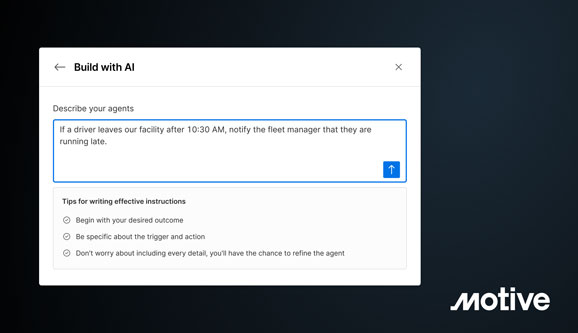
Motive, an artificial intelligence (AI) platform for physical operations, today launched Agents for field services teams, including landscaping and pest control.
Agents can turn the safety and operations data these teams already collect into immediate action. Agents can take over routine; manual work, including check-in calls and driver tracking; and bring in managers the moment something needs attention. It also ncan help crews arrive prepared, fix problems early and scale without adding headcount.
Motive is showcasing Agents purpose-built for field services teams at the National Association of Landscape Professionals‘ Elevate conference in Tampa, Fla., in the company’s booth (No. 1529).
“Field services like landscaping teams juggle seasonal crews, shared trucks and tight margins. Every late job, wasted gallon or avoidable incident costs money,” said Hemant Banavar, chief product officer at Motive. “The data to prevent these issues already lives in Motive. Agents can use it to help teams stay ahead of the daily problems that put safety, schedules and profitability at risk, so crews stay protected and jobs stay on schedule.”
Field services teams have more visibility than ever, but they can’t act on the information they have fast enough. Acting on the data still falls to managers as they match drivers to shared trucks, call crews for arrival updates and track down why a job ran long. This manual work takes hours every day and breaks down as seasonal crews rotate in and out.
“Our drivers are our most important asset, so keeping them safe is critical,” said Erick Stover, safety and quality assurance manager at Timberline Landscaping. “Motive has helped us make safety more visible and actionable. Showing drivers video, stop-sign data and safety-score trends helps them recognize habits they didn’t realize they had and take ownership of their driving. With seasonal crews rotating through, one missed problem gets expensive. We’ve seen that firsthand: Safety incidents over the past two years resulted in roughly $600,000 in insurance payouts. Motive Agents can give us more time for the coaching and training that reduces risk and keeps insurance costs down.”
Agents can take on routine work for field services teams across driver management, dispatch, fuel, maintenance and safety. Here are a few examples of how they can help stop problems before they start:
- Keep crews safe and jobs on schedule. Managers spend hours calling the field for updates. Agents can bring in Atlas, Motive’s AI assistant, to call drivers directly in the cab. Atlas alerts the manager when a job is complete or the crew is running behind and schedules and briefs drivers on required equipment and weather and safety conditions.
- Assign every trip to the right driver. When crews rotate and trucks are shared, it’s hard for managers to know who was driving. Agents can ask drivers for their name and ID when they start driving, so every trip, hour and safety score is tied to the right person. Managers coach the right driver and spend less time on manual tracking.
- Prevent breakdowns before they sideline a crew. Agents can flag critical fault codes, explain the issue and severity and create a work order in Motive Maintenance, so repairs start sooner and crews keep working. They can also alert fleet managers to upcoming service needs before they become problems.
- Cut fuel costs from idling. Unnecessary idling burns fuel and wears down engines. Agents can flag excessive idling as it happens and prompt drivers through Motive’s AI Dashcam Plus to shut off the engine.
Agents are available now to Motive customers. Field services teams can start with creating their own Agents from scratch or use ready-to-use templates, with no technical expertise required.
Later this year, Agents will be able to call drivers directly in the cab using Atlas. Early next year, teams will be able to start from the result they want. They will be able to set a goal in plain language, like fewer collisions, more on-time jobs, or lower operating costs, and Agents will determine the path, improving over time as they learn from each operation.