SUBSCRIBE


This article was written by Beau Slavens, president at Avant Tecno USA.
Campus grounds crews work year-round to keep diverse landscapes and pathways in top condition. These crews navigate various tasks daily, from mowing lawns before classes begin and spreading fertilizer on the soccer fields. These busy teams need tools that allow them to work safely and efficiently around pedestrians, events and seasonal weather changes.
Many grounds teams have now turned to compact loaders to maintain all campus areas and reduce time wasted switching equipment. Through this shift, teams have also found that each task requires fewer hands, allowing more time to ensure all areas are ready for back-to-back events during the busy school year.
Plan accordingly before choosing a compact loader
Because campus landscapes differ from traditional construction sites, operators need to consider several factors before deciding which compact loader will work best for their team.
The loader’s size should be the first deciding factor. An easy way to make a selection is to start with the width, then measure it against the landscape’s tightest access point. From there, the operating weight and ground pressure should be assessed to ensure softer ground incurs less damage. This assessment will also help teams decide on tire and track options to further reduce the risk of damage. Crews should also consider how the machine executes turns, as some machines can tear up grass, especially if the wheels skid or pivot. If this is a concern, an articulated loader is an excellent solution, as it bends in the middle when pivoting, avoiding surface disturbance.
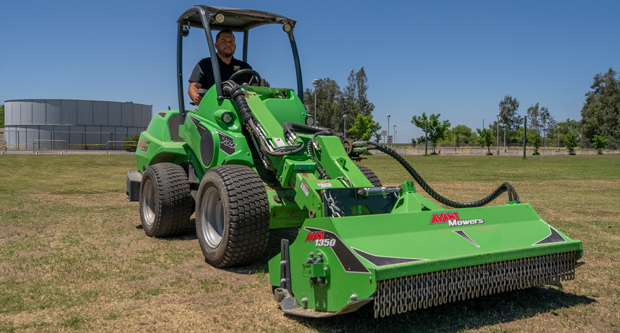
Since schools and colleges often have varied landscapes, tool carriers with a quick-attach system are an optimal choice for teams looking to improve efficiency across workflows. For example, a team can complete all required tasks in a specific area with one attachment before moving on to another zone, switching the attachment in a minute or less.
Building the right attachment set
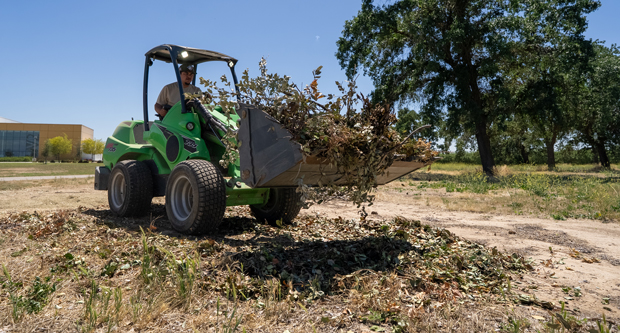
For those not sure where to begin, there are three essential attachments that set any grounds team up for success. First, a general-purpose bucket to handle working with mulch, topsoil, compost and gravel, plus the grooved edge doubles as a light grading tool when beds need to be refreshed. Second, pallet forks for moving material that arrives on a pallet, such as sod, pavers, retaining wall block and bagged product. To finalize each task, a broom for quick clean-up of any remaining debris.
Once the grounds teams are comfortable operating the starting attachments and have identified any other areas for improvement, they can expand the equipment to meet their specific needs. The next common additions for crews are tools that clean up storm debris. For seasonal tasks, a tool that spreads seed or fertilizer is helpful, as well as a blade or blower for the winter. It’s typically best practice to add one attachment at a time to the team’s inventory to make sure the grounds teams are fully confident operating the equipment before introducing anything new.
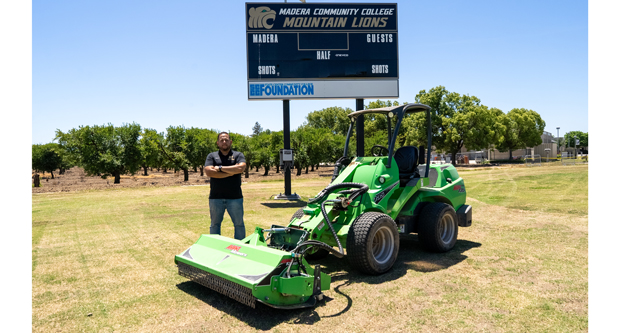
At Madera Community College in Madera, Calif., a two-person grounds crew described replacing their tractor, mini excavator and other single-purpose machines with one loader and a set of attachments as significantly more efficient. The crew reported that changing an attachment takes under half a minute and tasks that once required several people are now handled by one person.
“Instead of switching between machines, we simply change attachments,” said Alberto Villegas, the grounds and custodial manager.
How to plan for seasonal staff and workers
Since grounds teams frequently rely on student workers and seasonal staff, intuitive equipment and streamlined training are essential. Managers should establish a clear onboarding guide covering core operations including startup and shutdown procedures, attachment changes, hydraulic coupling, slope limits and pedestrian safety. Additionally, implementing a quick five-minute pre-operation inspection (checking tires, tracks, hoses, quick-coupler pins and fluid levels) helps prevent downtime to ensure a safe and efficient performance. Some actionable field tips include:
- Sequence work by zone, and stage materials at the edge of each zone before the loader arrives.
- Set attachment order at the start of the day so each change happens once.
- Schedule heavy hauling for early mornings or breaks between classes, when foot traffic is light.
- Walk the route first and mark irrigation heads, shallow utilities and soft ground spots.
- Track hours and attachment use each season to see which tools earn their keep.
How campus equipment is evolving
Upgrading equipment helps campuses manage seasonal labor shortages without compromising landscape standards. As the compact loader market evolves, campus landscape managers increasingly prioritize machinery that lowers the barrier to entry, operates with minimal environmental impact and runs quietly enough to work during class hours without causing disruption.
Ultimately, compact loaders are transitioning from simple utility machines into essential hubs for grounds operations. Departments that embrace this versatility can adapt to seasonal demands, maximize budget efficiency and maintain campus landscapes year-round.