SUBSCRIBE


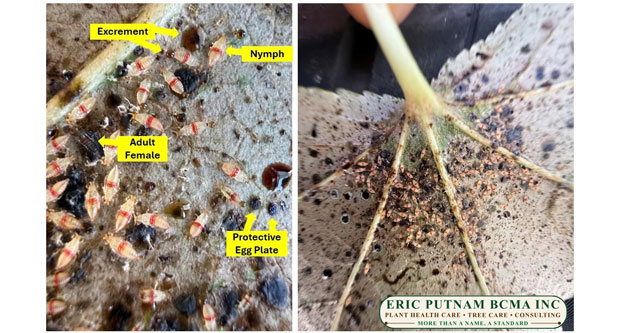
A field investigation by Eric Putnam BCMA Inc., a provider of arborist consulting, tree care and plant health care, has led to USDA confirmation of redbanded thrips (Selenothrips rubrocinctus) from trees in Houston. The company received the identification on Oct. 5 after its team photographed the insects, collected specimens and worked with state and federal specialists to establish their identity.
The USDA notification confirms 15 immature specimens and 15 adults collected on Sept. 9, 2026, in Houston, Harris County. A National Identification Services National Taxonomic Specialist identified the specimens.
Based on its USDA correspondence, the company understands the finding to be recognized as a new Texas state record for redbanded thrips, a pest previously documented only within Florida. A corrected notification addressing that designation remains pending. The completed species identification is documented in the company’s updated public article.
The investigation began when arborists encountered sweetgum trees with unusual feeding damage, dark spotting and premature leaf loss. Initial possibilities included lace bugs and other thrips. Arborist Anderson Gonzales photographed multiple life stages on affected leaves and worked with Shane Krajnik to develop the tentative identification.
Research for the company’s Liriope’s Muse blog raised questions about the insect’s documented Texas distribution. Krajnik, Gonzales and Avery Henderson, lead plant health care technician, gathered material for identification. James Boone Holladay with Galveston County Texas A&M AgriLife Extension helped connect the team with specialists; earlier identifications were relayed from Wizzie Brown and Texas A&M University Entomology before the USDA confirmation.
The company reports additional observations on sweetgum and common persimmon across its service area, with the farthest reported locations 71.9 miles apart. Its map shows selected observation locations, not a complete survey or a total case count or a measured rate of spread.
Redbanded thrips can injure leaves and contribute to premature leaf drop. Tree owners noticing unusual damage can photograph both sides of affected leaves and seek identification from a qualified arborist or local Extension office. Similar symptoms can have other causes.
USDA entomologist Xanthe Shirley advised the company that submitted specimens would likely enter the Smithsonian National Museum of Natural History insect collection. The company is also coordinating specimen documentation with the Texas A&M University Insect Collection and will most likely be co-authoring the Texas A&M Forest Service fact sheet according to Lindsey Stone.