 SUBSCRIBE


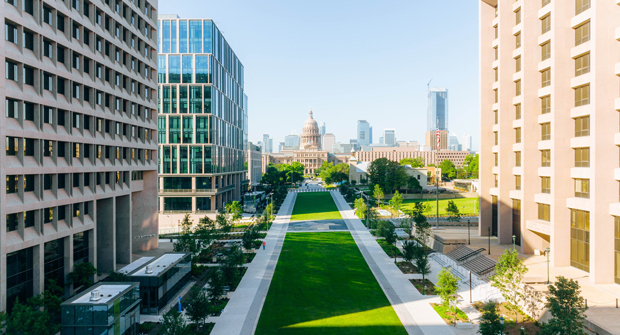
Decades ago, Ivan Giraldo, a native of Colombia, started a small residential landscape company in Miami. That business showed him the potential of the landscape industry. He eventually became a field employee for a larger company, and then was promoted to a branch manager.
In 2005, he had the vision to found Clean Scapes with the help of his partner Rex Gore. That company has grown over the years and now has locations in Austin, Dallas, San Antonio, Fort Worth and Houston — and this year, comes in at No. 29 on the LM150 list of largest landscape and lawn care companies in the nation, with a reported revenue of $153 million in 2025.
“We started Clean Scapes in June of 2005 as a dream and desire to create a company that will keep providing top-quality and reliable landscape services to our clients and communities, as well as a good place to work for employees,” Giraldo says. “Clean Scapes has grown so fast because of the team that we’ve been able to put together. Our vision and our desire is to run a good, reliable and profitable business. And we have plenty of confidence that we are the best in the industry.”
Scaling the Machine
Giraldo took a step back from the day-to-day of the business but still works as a board advisor. But as he took a step back, the company took a step forward by adding two new powerful thought leaders: CEO Bubba Nickel and COO Don Meier.
Joining the company in March of 2024, Nickel has experience as an international CEO, serving companies in Sydney, Australia, and London. With a degree in economics from Northwestern, Nickel doesn’t have landscape and lawn care experience, but he knows how to appreciate it.
“The bulk of my career has been on the other end, where we’ve owned or managed properties … so the appreciation for quality landscaping has been a pretty significant part of my career,” Nickel says. “From a career perspective, regardless of the department or company, I seem to have gravitated to businesses that have a good business model and a good base culture that’s positive but is struggling with scaling.”
As for Meier, before joining Clean Scapes, he was in management consulting, advising Fortune 500 energy, industrial and commercial services clients on complex operational challenges.
“The majority of my time was at the intersection of operational improvement, operational standardization and advanced technologies,” Meier says. “I loved consulting, but I got linked up with Clean Scapes, and I’m absolutely loving this industry.”
Meier’s main task is to build systems into Clean Scapes and create operational opportunities to improve productivity.
“I want to make sure the operations are humming,” Meier says, “and that we’re serving our clients with great customer service and exceptional quality while doing it in a way that’s efficient, both for us and our clients.”
The human element
Nickel says the main thing that attracted him to Clean Scapes is that it is a great organization that abides by moral ethics. Now that he and Meier are there, the job is to maintain that environment.
“How do we deliver that in a way that we get the value of our size, and we create efficiency while at the same time not lose the culture that created this environment?” Nickel asks. “We’ve got employees who have been with us since the beginning. We have to maintain a corporate environment where its people want to work there and feel they’re appreciated and delivering value … and we want to do that everywhere.”
Nickel adds that Clean Scapes didn’t grow to the size it is today because they undercut the market value of their services. They grew because they trained their employees to do the job right, which attracted interest.
Clean Scapes’ services include landscape maintenance and enhancements; water management and construction; design assistance; strategic constructability analysis; and softscape and hardscape installation.
“The human element of this is significant — from one landscaping company to the next landscaping company, what causes one company to do things right and another company to just get in and out as quickly as they can?” Nickel asks. “Our most significant opportunity for revenue growth isn’t in marketing or knowing the right person. It’s in doing a great job on a property, and then that property manager gives us a crack at some of their properties we’re not maintaining.”
Embracing change
When it comes to how the industry is handling acquisitions and private equity money, Nickel says he “only knows what he knows” and hasn’t spent much time analyzing the topic. He does think, though, that private equity hasn’t quite figured out the landscape industry yet, which is why they are taking a different approach at Clean Scapes.
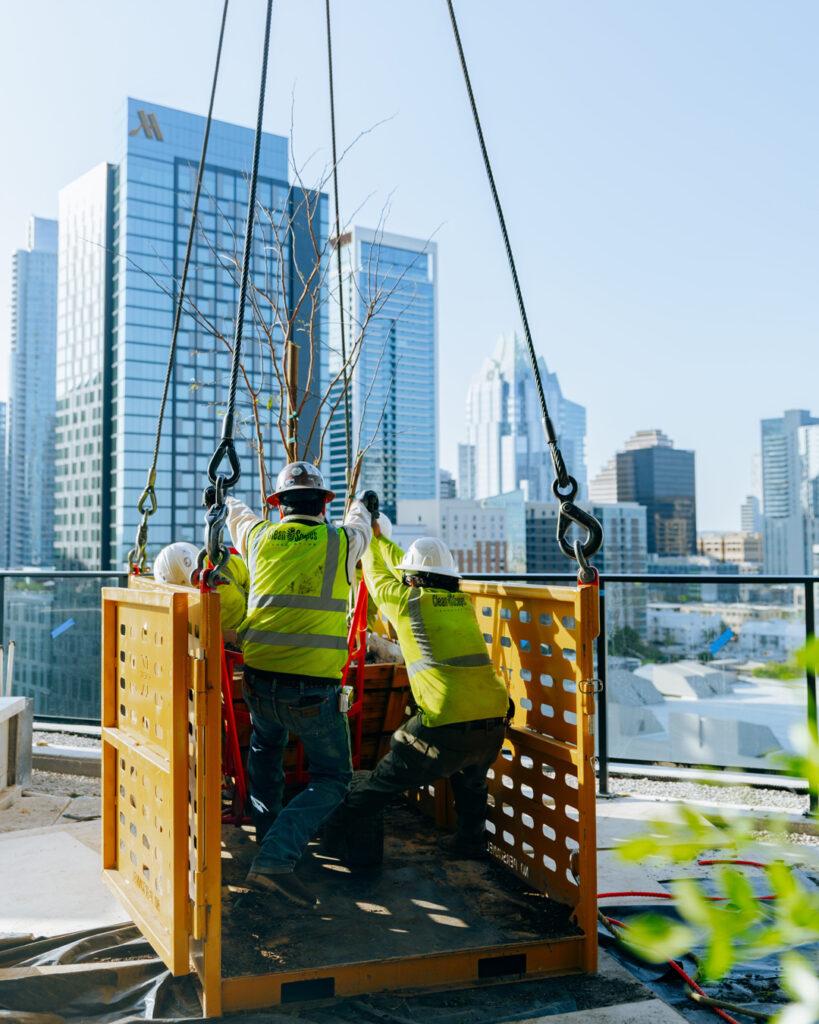
“We felt like our organization had grown so fast that nobody had taken the time to take a breath and reinvest in ourselves,” he says. “We’re reinvesting in our company after recapitalizing the business. Our capital partner is Blue Sage Capital, based out of Austin. We’re reinvesting in our equipment, human resources, processes, technology. We’re trying to go back in and say, ‘How do we create a business that you can actually see the benefits of scale.’”
Nickel hopes that after a year or two of reinvesting into Clean Scapes the company will then be in a position to look at making acquisitions.
“We’re not going anywhere until we know what we can do, what we do in a repeatable fashion in an organization that’s a great place to work,” Nickel says.
Though both Nickel and Meier are relatively new to the landscape industry, both agree that it’s an exciting time to be in the industry and for their business.
“This company was built on an incredible foundation,” Meier says. “It comes down to the really high levels of talent we have, from the front line and having some of the best landscapers in the industry.”
“It’s really interesting because a lot of things happen during change … but at the end of the day, do your employees trust you? Do they want to work for you?” Nickel says. “That’s what is exciting about this — the quality of the people we have is truly exceptional. We’re trying to maintain that ethos while we’re making change. We’re spending a lot of time as an organization talking about embracing change, we’re making it transparent. And so far, out of the gates, we’ve been doing well.”
Read more LM150:
- LM150 2026 rankings: The industry’s top 150 revenue-generating firms
- LM150 Top 25: The largest companies in 2026 by profit center and client mix
- LM150 2026: The top 25 companies broken down by region
- LM150 Growth: Inside the fastest-growing LM150 firms
- LM150 Analysis: Top landscape companies drive $22 billion in revenue
- LM150 Profiles: How Schill Landscape Collective became a top commercial landscaping company
- LM150 Profiles: How Saluda Hill Landscapes is building sustainable growth with people and technology