Every mower manufacturer offers a manual and best practices on how to keep mowers running strong all season long. But for the people who watch their fleet of mowers leave the yard every day, they know that manual can only help so much. It’s up to the operators to take care of the machine in the field.
We asked four mower experts for the one main message they try to convey to crews to minimize maintenance.
Gaskets vs. engines
Jhosse Cruz is the fleet manager for GreenSweep in Silver Spring, Md. He has been with the company for 15 years and rose through the ranks from a member of the crew to fleet manager.
Today, Cruz is responsible for maintaining around 40 to 50 mowers, mainly Wrights and Exmarks, for GreenSweep. When it comes to his mower mantra, he tells the crew, “It’s better to replace a gasket than an engine.”
“I remind them of the cost to repair a motor,” Cruz says. “I enjoy taking an engine out of a mower and repairing it. It’s fun. But it takes time, and it’s expensive.”
Heat kills
Wes Bollingmo manages the technical service team for Toro. He’s been with the company for 10 years but got his start as a small engine tech at age 14.
Bollingmo says the biggest mower advancement he’s seen over the years is Toro’s ability to reduce the number of moving parts on its mowers.

“The biggest thing we try to do is eliminate moving parts. If you can eliminate moving parts, you eliminate the opportunity for failure,” Bollingmo says. “Keep the parts counts down, and keep the parts common, so we can control the quality of the parts from machine to machine.”
When it comes to his mower mantra, Bollingmo doesn’t hesitate: “Heat kills.”
“That’s the biggest thing, all the time. Keep it clean, keep it moving the way it should,” Bollingmo says. “Lubrication failures are one of the highest things we see on the engine side. Heat will climb up on you.
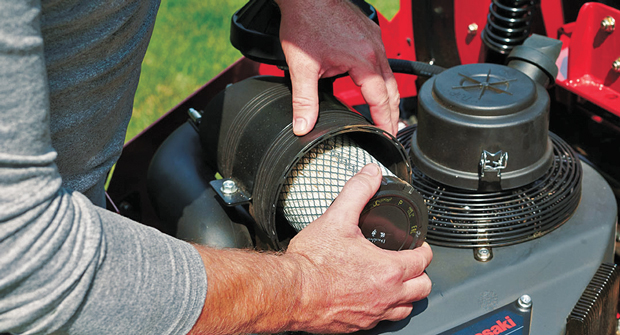
Sometimes it’s as simple as just blowing them off, keeping them clean. And make sure it has fresh air to breathe from an air filter point of view. Make sure your oil is fresh. Degraded oil increases friction, friction creates heat, heat creates failure.”
Keep blades sharp
James Cap is the president and owner of NEA Lawn Pro in Jonesboro, Ark. The company has changed mower brands three times in recent years because he was dissatisfied with the performance of his first two manufacturers. But the third time was a charm, as he has enjoyed his switch to John Deere, and raves about his Deere distributor, Greenway Equipment.
When it comes to NEA Lawn Pro’s mowers, Cap’s mantra is “keep the blades sharp.”

“The guys are supposed to be sharpening mower blades every two to three days. Last year at Equip Expo, we invested in a true mower lift that’s like a car lift, manufactured by Ideal,” Cap says. “It was a very reasonable price. We bought the floor model, and they shipped it to us. They can drive the mower up on it and raise it.”
Cap adds that he asks the crew to change the oil every 50 to 75 hours and to keep everything greased weekly.
“If spindles go down on mowers, then you’re out a few days,” Cap says. “No one wants to take the mower back to the shop just to replace the spindle or replace a belt.”
To learn more about Cap and NEA Lawn Pro, see his 5 Questions interview on page 82.
Wash mowers less frequently
Keegan Smith is the fleet manager for Atlas Outdoor in Flint, Mich. He has worked for the company for 13 years and says he loves working on the company’s fleet of Exmark Lazer Zs.
His mantra: when it comes to washing the mowers, less is more.
“I’ve noticed spindles and anything bearing-wise lasts longer if you don’t wash the mowers every week. The biggest thing we do is we only wash the mowers once a month,” Smith says. “It has helped out a crazy amount when it comes to maintenance and changing spindles.”
Smith adds that in the heat of the summer, the mowers don’t get that dirty anyway. If conditions are muddy, he is OK with them getting washed sooner.
“Our guys are trained on the end of every shift to use their backpack blowers and blow off the mowers,” Smith says. “If they don’t need to be washed, don’t wash them.”