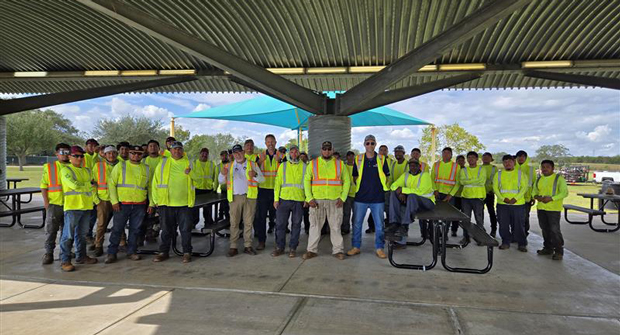
Greenzie announced its third annual Best of Greenzie Awards, recognizing commercial landscape operators who are turning autonomous mowing into a business tool.
The awards honor organizations that have integrated autonomous technology into ongoing commercial operations. This year’s recipients showcase real-world adoption enabled by a mature autonomy platform, demonstrating that autonomous mowing has evolved into an established operating model with measurable gains in productivity, efficiency and labor relief across the landscaping industry.
“What stands out about this year’s winners is the consistency of their performance,” said Charles Brian Quinn, co-founder and CEO of Greenzie. “They’re integrating autonomous mowing into day-to-day operations and seeing clear improvements in reliability and output. They are demonstrating that the industry is ready to move from experimentation to sustained autonomous operations.”
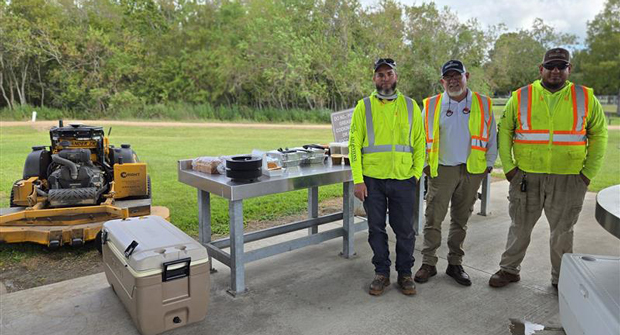
The awards use objective performance data, recognizing operators for consistent autonomous mowing across key metrics such as mowing days, acreage covered and sustained performance. The results reflect autonomy in active commercial deployment rather than pilot or trial programs.
This year’s Best Overall Performance awards showcase standout organizations setting the standard for autonomous mowing across diverse categories.
Those winners include:
- Landscaper – Yellowstone Landscape, headquartered in Bunnell, Fla.
- College and university – Georgia Southern University.
- New customer – Colonial Hills Landscaping, Inc. of Fayetteville, Ark.
Along with winning Best Landscaper, Yellowstone Landscape earned top honors across multiple performance categories, reaching new benchmarks for autonomous mowing in real-world operations. In one Yellowstone market, a single mower within Yellowstone’s autonomous fleet set a new record with 58 consecutive autonomous mowing days and logged 161 autonomous mowing days in a single season, setting a new standard for sustained autonomy within a single operating environment. In other Yellowstone markets, autonomous mowing achieved productivity milestones, with 1,032 autonomous acres covered in a single season in one market and 1,164 total acres maintained in a year in another.
Quinn said the awards come at a pivotal moment for the landscaping industry, as ongoing labor shortages continue to constrain growth, raise costs and strain day-to-day operations. Autonomous mowing allows companies to maintain and grow service levels with fewer available workers, while reallocating skilled labor to higher-value tasks such as detailed maintenance, customer service and crew supervision.
“This technology is about giving crews better tools, not eliminating the human factor,” Quinn said. “Autonomy helps teams stay productive, reduces pressure on workers and allows businesses to keep up despite labor shortages. These award winners show how autonomy can be scaled responsibly in ways that support workers and strengthen operations.”