*This article was submitted and written by Darin Gronwold, product manager for Ignite Attachments.
When winter weather hits, snow removal becomes a race against time. For landscape and snow removal professionals, efficiency isn’t just about speed — it’s about safety, planning and choosing the right equipment for the job. A proactive approach can mean the difference between smooth operations and costly downtime.
Here are five ways to make snow removal easier, safer and more productive this season.
1. Understand the terrain
Every successful snow removal operation starts with understanding the jobsite. Before the first flake falls, crews should take time to map each property. Identify obstacles like curbs, manhole covers and fire hydrants. Note elevation changes, drainage areas and designated snow piles.
Pay attention to the surface material — concrete, asphalt, gravel or turf — since it can affect attachment selection and cutting edge choice. Rubber edges, for example, are ideal for delicate surfaces where steel might cause damage. Taking these precautions minimizes equipment wear and operator risk once snow covers the ground.
2. Pick the right attachment
Matching the attachment to the application and machine ensures faster clearing, less strain on equipment and a better return on investment. Every site demands a slightly different approach, and understanding what works best where helps operators get more done with every pass.
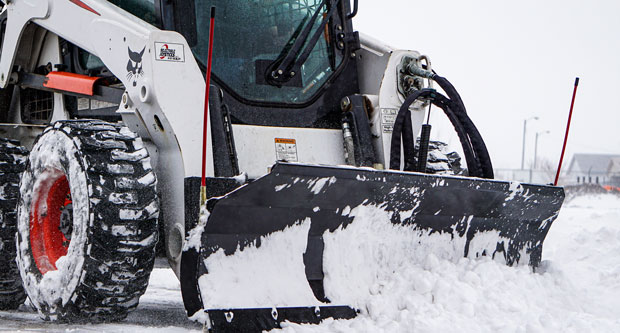
- Snow pushers: Best for large, open areas such as parking lots. Pushers move heavy snow efficiently with a simple, no-hydraulic design that attaches and pushes. Some models feature pullback options for clearing near buildings or tight areas.
- Snow blades or V-blades: Ideal for driveways, sidewalks and other areas that require precise snow placement. These attachments use hydraulics for adjustable angling and better control, helping operators push snow into windrows or direct it around obstacles.
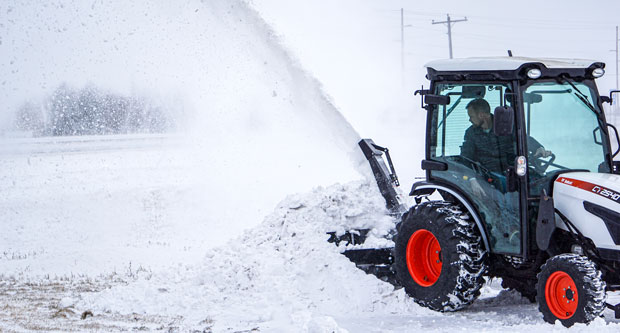
- Snow blowers: Perfect for areas where piling snow isn’t an option. Blowers throw snow up and away from work zones, making them a smart choice for narrow pathways and driveways. Operators should confirm their machine’s hydraulic flow or PTO specifications to ensure proper pairing.
- Angle brooms: Designed for light snowfalls or final cleanup on decorative or sensitive surfaces. These attachments offer excellent visibility and a clean finish, though they aren’t meant for deep or heavy snow.
Choosing the right fit starts with knowing your carrier’s specs, including horsepower, operating capacity and hydraulic flow. Some manufacturers offer online tools that help identify compatible attachments by make and model, taking the guesswork out of the process.
3. Have a game plan
Efficiency begins before the first push. Crews should plan a clearing pattern that minimizes overlap, fuel use and operator fatigue. Starting from the highest-traffic areas and working outward prevents snow from being pushed back into cleared zones. Whenever possible, plan snow discharge away from entrances, loading zones and drainage areas.
Coordination among operators also plays a key role. Resources like radio communication or site maps help avoid unnecessary passes and reduce downtime. A well-planned strategy maximizes productivity and keeps projects on schedule, even during back-to-back storms.
4. Keep clear lines of communication
Reliable performance depends on both machines and attachments operating at their best. Before each shift, operators should inspect equipment for loose fittings, worn edges or leaks. Hydraulic hoses and couplers should be checked and cleaned regularly to prevent buildup and connection issues. Look for attachments that include greaseable pins, reversible cutting edges and connect-under-pressure couplers—features that extend service life and simplify maintenance.
After each job, rinsing off salt and de-icing chemicals can prevent corrosion on both carriers and attachments. Greasing pivot points helps push out moisture and ensures smooth movement in freezing temperatures. Small steps like these protect your investment and reduce costly mid-season repairs.
5. Prioritize crew and equipment safety
Snow removal is demanding work, and long hours in cold weather can take a toll. Crews should wear insulated gloves, waterproof boots and high-visibility outerwear, and they should take regular breaks to prevent fatigue.
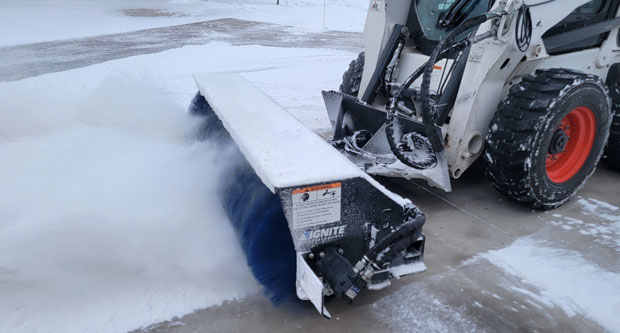
But safety and comfort go beyond PPE — the right attachment features can help too. Blade guide markers improve visibility in low light or blowing snow. Adjustable skid shoes prevent sudden jolts and reduce surface damage. Rubber or urethane cutting edges lessen vibration and noise, minimizing operator strain. Attachments with hydraulic angling or chute rotation allow operators to make adjustments without leaving the cab, keeping them warmer and reducing slip hazards. Corrosion-resistant coatings also help prevent maintenance-related injuries from rust or sharp edges.
In addition to these features, operators should always wear seatbelts, maintain clear lines of sight and travel slowly until familiar with the terrain. A combination of proper training, reliable equipment and safety-focused design helps ensure every job gets done efficiently and safely.
Be ready before winter arrives
The most successful snow removal operations don’t wait for the first storm to prepare. Knowing the site, matching attachments to applications and keeping both people and equipment in top shape sets the stage for a productive winter. Now is the time to inspect your fleet, review equipment compatibility and make any upgrades before the snow flies.
For added confidence, reach out to your dealer or trusted manufacturer for guidance on selecting the right attachments and keeping your crews ready for the season ahead.