SUBSCRIBE


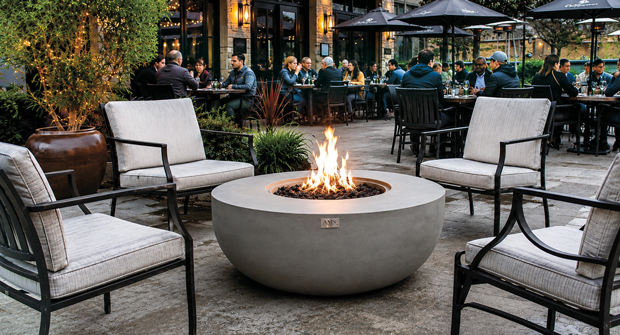
Outdoor fire features have become a defining element of many landscape projects. Yet specifying a gas fire pit involves far more than selecting a style or finish. Decisions made during the design phase — including gas supply, ignition systems, code compliance and service access —significantly affect installation costs, performance and safety.
Begin with the fuel source
One of the first decisions is whether the fire pit will use natural gas or propane. Natural gas offers an uninterrupted fuel supply for permanent installations, while propane provides flexibility when utility lines are unavailable.
Gas line sizing is equally critical; a fire feature can only perform as well as the fuel supplied to it. Before construction begins, a mechanical contractor must calculate pipe diameter, total run length and the property’s combined BTU demand. In the U.S., piping must comply with NFPA 54 (National Fuel Gas Code) or the local code adopted by the Authority Having Jurisdiction (AHJ).
Select an appropriate ignition system
Ignition systems range from simple match-lit burners to sophisticated electronic controls. Match-lit systems remain a reliable and economical choice for many residential projects. Push-button spark ignition provides additional convenience while maintaining mechanical simplicity.
For luxury residences, hospitality spaces and commercial developments, electronic ignition systems offer enhanced safety and ease of operation. They feature automatic gas shut-off via flame-sensing technology and seamlessly integrate with smart home automation, remotes, timers and wall switches.
When specifying electronic ignition systems, designers should confirm component compatibility with the fuel type and environmental conditions. Choosing American National Standards Institute- or Canadian Standards Association-certified fire features and components ensures the system meets recognized safety standards.
Understand BTU requirements
BTU output is often viewed as a measure of fire pit performance, but higher numbers do not always translate into a better fire. Burner design, fire media, wind conditions and gas pressure all contribute to the final flame presentation.
Most residential fire pits operate between 65,000 and 200,000 BTUs, while larger custom installations may require significantly more. Coordinating the desired flame characteristics with the available gas supply early in the design process helps prevent disappointing results after installation.
Evaluate site conditions
Every project site presents unique challenges. Prevailing winds can influence flame stability and fuel efficiency, making wind guards or thoughtful placement worthwhile considerations. Proper drainage is equally important, particularly for electronic ignition systems, to prevent water from collecting within the enclosure.
Designers should also provide adequate access for future servicing. Gas valves, electrical components and ignition systems should remain accessible without requiring the fire pit to be dismantled.
Clearances and ventilation
Every fire feature should be installed in accordance with the manufacturer’s installation instructions, applicable local building and fuel gas codes, plus all clearance and ventilation requirements. Minimum clearances to combustible materials, nearby furnishings and overhead structures vary by product and should always be incorporated into the construction documents.
For propane installations, ventilation within the enclosure is essential to allow any escaping gas to dissipate safely.
Partner with a specialist early
One of the most effective ways to avoid delays is to involve a fire feature specialist early during the design stage. An experienced supplier can help verify gas requirements, recommend ignition systems, review manufacturer installation requirements, confirm applicable code requirements and identify potential issues before they become costly. Early collaboration allows landscape architects to focus on creative design while helping ensure the finished installation performs safely and as intended.