 SUBSCRIBE


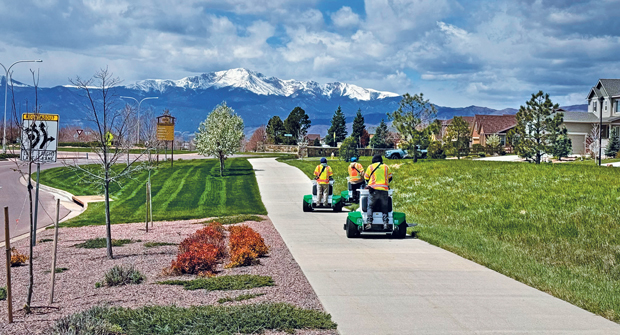
In this Q&A, Brandi Hagler, director of insurance partnerships at Linxup, explains how robotic mowers are changing the operational and insurance risks landscaping companies need to manage.
Robotic mowers can cut grass, navigate properties and return to charging stations with little direct involvement from a crew member. As GPS, cameras, vision systems and artificial intelligence (AI) make the equipment more autonomous, landscaping companies may be able to complete routine mowing work more efficiently and maintain properties more consistently.
But autonomy does not absolve a lawn care company of its responsibility for what happens on a jobsite. A robotic mower cannot explain why it crossed a property line, damaged landscaping, operated in unsafe conditions or disappeared from a property. Business owners still need to know where equipment is, how it is being used, when it was serviced and who was responsible for the job.
For landscaping companies, adopting robotic mowers responsibly will require more than purchasing new equipment. It will require human oversight, strong safety practices and clear records that demonstrate to customers, insurers and underwriters that the business is managing the technology and its risks.
Q: What unique operational and liability challenges do robotic mowers create for landscaping companies, especially when equipment moves between customer properties?
Hagler: The core challenge is that the equipment can’t account for itself. When a crew member damages something on a property, the business can get the story from the crew member. A robotic mower can’t provide a story. The company is left reconstructing an event nobody can account for, and the responsibility for that event still sits with the business.
Moving equipment between properties adds custody questions that didn’t exist when a mower stayed strapped to one crew’s trailer. Which crew loaded it, which property it ran on that day and whether it was the unit assigned to that stop all become things the company has to establish after the fact. Theft is also an issue. These machines cost several thousand dollars, and one person can quickly lift them into a truck bed, especially when they sit unattended in yards for hours. When one goes missing, the police report and the insurance claim both need to know where it was and when it was last operating. A rough guess won’t hold up.
Q: Why can autonomous equipment increase rather than reduce the need for human oversight in a lawn care business?
Hagler: The biggest misconception about robotic mowers is that they reduce responsibility. What they actually do is concentrate the responsibility. The machine takes over the physical work, but judgment calls are still the responsibility of the business. Someone still has to decide whether conditions are safe, whether a jobsite has hazards the mower won’t recognize, when the equipment was last serviced and who responds when a customer calls with a complaint.
On a traditional crew, those calls spread across the people standing on the property. With autonomous equipment, the responsibility can land on one operations manager watching a screen. If that person doesn’t know those calls belong to them, nobody makes them. A customer whose property was damaged doesn’t distinguish between the machine and the company running it, and neither does an insurer. The business answers for both.
Q: How are landscaping businesses typically monitoring robotic mowers today, and where do those approaches tend to fall short?
Hagler: Today, it’s usually some combination of the manufacturer’s app, occasional checks by whoever happens to be on-site and customer calls when something goes wrong. Each comes with drawbacks. Manufacturer apps are built per brand, so a business running units from three makers is checking three separate systems that don’t connect to each other or to the rest of the fleet. Site checks depend on someone being nearby at the right moment. And a customer call means there’s already a problem, so the business is responding instead of preventing.
The technology also has a ways to go. A Fast Company writer who tested a GPS-guided mower in June set a stay-out zone around a patch of wildflowers and then watched the mower drive through it anyway after a setup process where the satellite connection repeatedly dropped. That happened on a private half-acre lot. On a commercial route, the same malfunction becomes damaged customer property, and the business only learns about it when the customer decides to report it.
Q: Besides knowing where a mower is, what records should a landscaping company maintain to show it is managing the equipment responsibly?
Hagler: The standard I’d apply is whether someone who wasn’t there could reconstruct the job later, because that’s what a claims adjuster or an underwriter will need to do.
Beyond location, you need usage records: run times, schedules, the properties serviced and whether it ever operated outside its assigned area or hours. Add maintenance records, including blade changes, software updates, repairs and inspections, because whether the machine was in safe working order is one of the first questions after any incident. Include accountability records with a named person responsible for each mower on each jobsite, documented somewhere retrievable. And you need incident documentation. When a mower damages property, stops working or leaves its area, a short written record made that day carries far more weight than anyone’s recollection months later, which is when the claim will likely arrive.
Q: How could robotic mowers change insurance and underwriting conversations for landscaping companies as the technology becomes more common?
Hagler: Underwriters price what they can verify, and right now, autonomous equipment is largely invisible to them. I don’t expect that to last. As robotic mowers show up on more commercial routes, the questions in renewal conversations will get specific: How many units are in the fleet, where do they operate, who supervises them and what happens when one malfunctions? Autonomous equipment does not make liability disappear, but it does change what the business needs to prove. For a lawn care company, the issues include where the mower was used, how it was used, who was responsible for the jobsite, whether the equipment was maintained and what documentation exists if a customer, insurer or underwriter has questions.
Documentation will shape how individual businesses fare in such conversations. A company that can produce location and service records in minutes gives an underwriter something concrete to price. A company that can’t is asking to be priced on uncertainty, and uncertainty never gets the better rate. Companies that adopt autonomy responsibly will keep people in the loop and use data to show they are managing risk, not just adding new technology.
Q: How can landscape business owners introduce robotic mowers without sacrificing safety, accountability or visibility across their crews and jobsites?
Hagler: Start with a limited deployment on properties suited to the technology: flat, fenced sites without pools, play equipment or regular foot traffic. Treat the first season as a trial period. The goal is to learn how the equipment behaves before it’s operating in a place where a malfunction carries higher stakes.
Assign each machine to a specific person who owns its schedule, condition and results so that the question of who was responsible for a given jobsite always has an answer. Set operating rules before the first cut, including the hours it runs and the conditions that pull it off a property. Then bring the units into the same system the business uses for the rest of its operation. Most landscaping companies already track their trucks and trailers, and robotic equipment warrants at least that level of attention. A season run this way produces months of clean records, which tells a customer or an insurer more than any product specification can.
Q: Looking ahead, how will GPS, cameras, vision systems and AI change what responsible robotic mower use looks like for landscaping companies?
Hagler: The equipment will improve quickly. The setup problems people run into today, like antennas, manual mapping and dropped signals, are already being engineered out. Husqvarna is rolling out a cloud GPS service that lets customers subscribe to a network of reference stations instead of installing their own antenna. Camera and vision systems are beginning to catch the obstacles earlier models missed. Within a few years, mapping a commercial property may take minutes.
Every one of those improvements also produces a record. The same sensors that help a mower navigate can show where it operated, when it ran and what it encountered, which means equipment that can’t explain itself today will be able to document its own work tomorrow. I expect that data trail to become the baseline for commercial use. The account, the claim dispute and the renewal will all come down to how quickly a business can show what its equipment did. Owners who build that discipline now, while their fleets are small, won’t be scrambling to establish it when an underwriter requires it.