 SUBSCRIBE


Late last year, a message to Landscape Management hit our inbox, inviting us to tour Petitti Family Farms’ massive collection of nursery facilities and its four main farms — Willowbend, Ridge Manor, Losely and Klyn.
The tour showcased several of the high-end and innovative tools that were boosting operations for the nursery and its more than 4,000 acres of plant production in Perry, Ohio, landing Petitti among not only one of the largest nurseries in the nation, but also one of the most advanced.
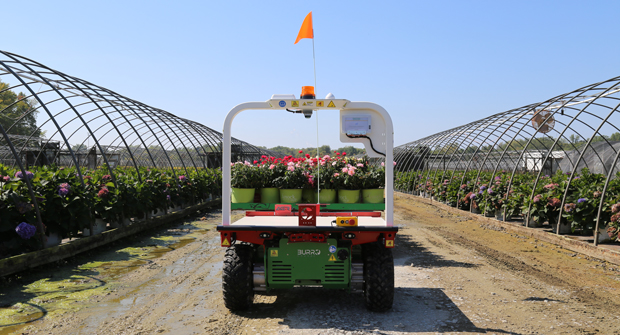
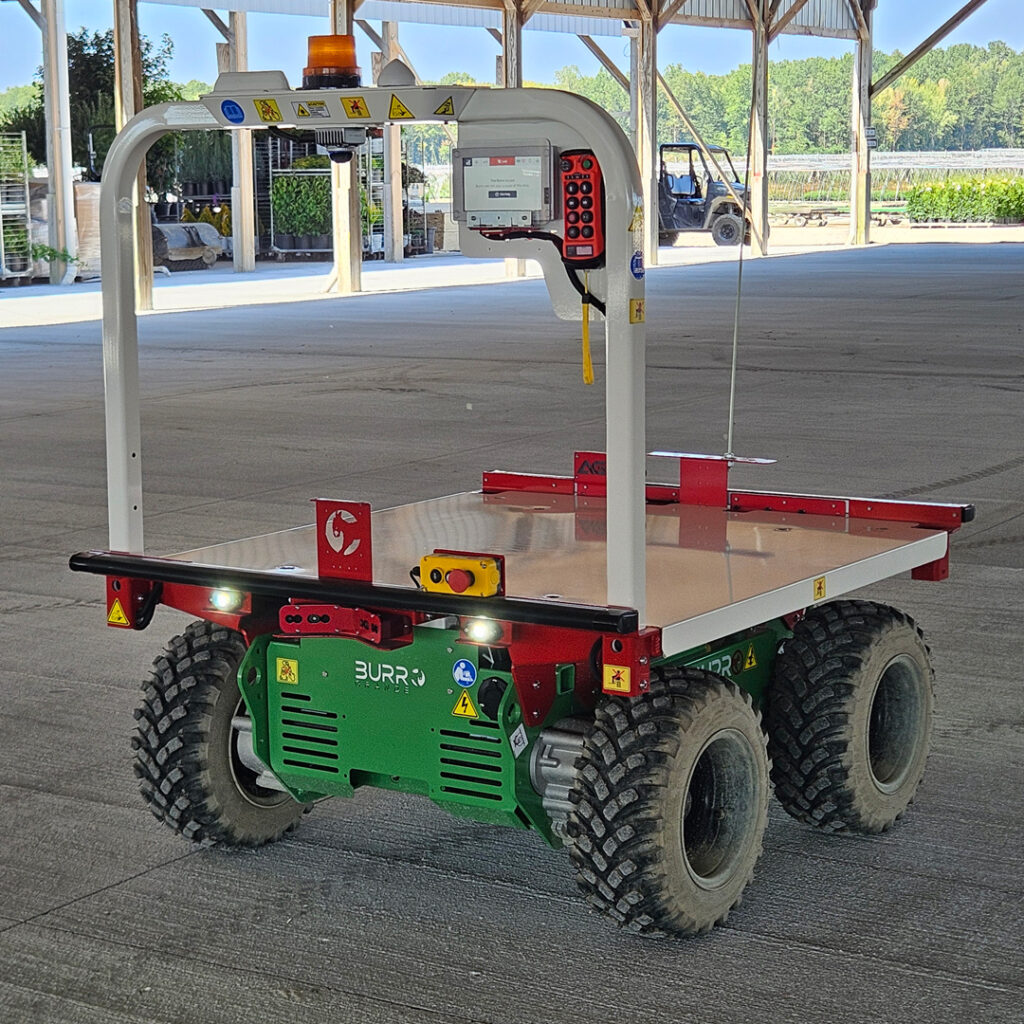
And while some tools like MDE Globe KRB100 tree tying machines or Lommers Tuinbouwmachines hedge trimmers were impressive, what really separated the company was its adoption of autonomous equipment, specifically its 10 Burro Grande autonomous carts.
“My father-in-law and I, and our operations manager for our Willowbend operation, we travel to Europe every year, and we look for automated equipment when we go to the show — the IPM (Essen) Show. And we were starting to see autonomous vehicles over there, but with restrictions in the United States; they were limiting what can actually be produced in the U.S.,” says Joe Allio, president of Petitti Family Farms. “Burro was really the first one that we saw that looked like it could work within our nursery.”
And the robots definitely worked, resulting in Petitti jumping from 10 to 25 Burro carts by the end of 2025, making it the largest U.S. nursery operation Burro is involved in. Allio says the wagons have several benefits on top of their perfect sizing, including a good battery life that lasts a full eight-hour workday and the ability to carry the weight of their containers and plants.
Labor saver
Petitti started its journey with Burro wagons similar to how other landscape operations use autonomous equipment, first needing to map out the machines’ paths along the company’s many highways and to different destinations.
“It’s a very easy, user-friendly system to map out all your houses that you send them to, and we’ve been using it 100 percent this year on our potting. So, whatever we pot up in our main barn, we put them on the Burros, and then we take them straight out to the different houses to set down,” Allio says. “It’s been great to be able to eliminate the labor for just riding on a tractor back and forth all day from the potting barn.”
Petitti has also been using the carts for consolidation within the facilities to move plants from one area to the next, plus pulling orders and bringing them up to its shipping dock.
And even though they’re not quite as fast as moving material with a person on a tractor, Allio says the ability to repurpose that labor toward other parts of the nursery is a much bigger benefit.
“(Burro is) working on increasing the speed, but you don’t really gain speed efficiency from miles per hour,” Allio says. “From a Lean concept, you’re constantly utilizing them out in the nursery, so they’re performing jobs while you don’t have the labor tied to it.”
For those that fear autonomy is replacing jobs, Allio says the opposite reaction occurred at Petitti, with everyone really embracing the adoption of Burro carts. He says pulling plants on a tractor is monotonous work, so the company is now working on putting people in more fulfilling positions.
“What we’re trying to do is make sure that (everybody is) maximized to their fullest potential and see what other jobs we can utilize them for, so that’s a big task that we have right now,” Allio says.
Better Burros
Even though Petitti went from 10 machines to 25, they’re still not done finding ways to grow the technology. Thanks to a close relationship between the two companies, Allio says Burro is dedicated to finding improvements to the machine’s capabilities and Petitti’s operations.
One of the results of this partnership is Burro’s recent introduction of a larger, faster model that can carry more weight. Petitti trialed them early, and Allio says they performed exceptionally. Now, the nursery is looking at adding them to a hillier facility that is better suited for the heavier-duty machines.
“(Burro) continues to improve on the technology, so that’s the one advantage that you have with partnering with somebody like them,” Allio says. “They’re willing to be on-site and look at your operation, see what are different ways we can utilize this technology. When they built this new, bigger version, that was feedback that we gave them a year ago.”
The heavy-duty machines also have attachments that help with other jobs, such as mowing or spraying chemicals, the latter of which Petitti is actively evaluating for its operations.
As for software upgrades, Allio says Petitti and Burro are working on updates to bring new features to the wagons. For example, a bilingual voice command system is being developed and is scheduled to launch by end of year, and a notification system that sends text messages to operators if a machine gets stuck will also be coming soon.
A future of autonomy
Despite the differences in goals and needs between landscape service businesses and nurseries, Allio says there are similarities with autonomous solutions that each side can learn from, especially regarding new possibilities and capabilities as the technology grows.
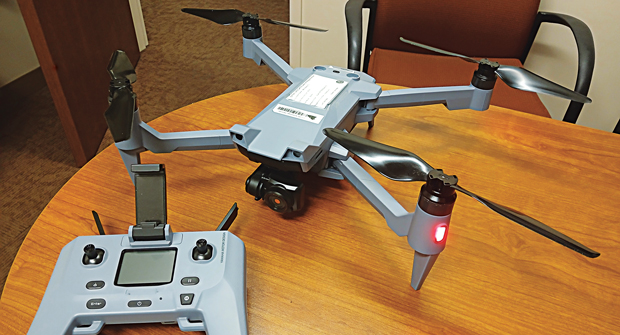
For example, Allio says Burro wagons could be used on larger commercial landscape projects, transporting material similarly to how Petitti is using them. Another way Petitti is showcasing autonomous technology is through drones, which could eventually make their way into the landscape maintenance space.
“We have drones that our facilities use,” Allio says. “We have team members that are certified pilots, and we’re utilizing it to spray and to fertilize our fields.”
And looking forward, Petitti is continuing to stay ahead of the technological curve with ideas for autonomous potting and inventory operations.
“I think in the future, there’s working with a couple of different companies that are looking at inventory as one additional way to use autonomy in vision, whether it’s on cameras or Lidar,” Allio says. “I think the other robotic thing that we’re really looking hard at is on the potting side, looking at our facilities and how we pot plants. Right now, it’s all humans sticking a liner into a pot. I think you can do that robotically, and there’s companies out there that we’re talking to right now that are developing the technology to do that.”