 SUBSCRIBE


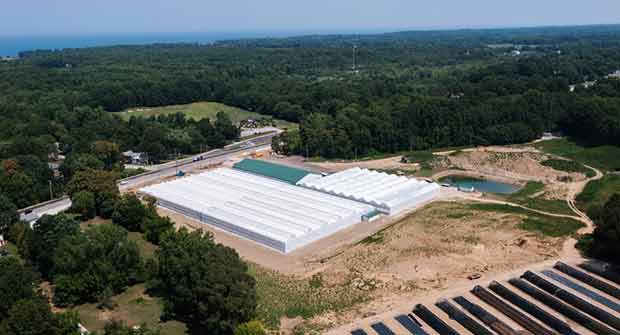
Petitti Family Farms has announced the opening of its new Red Mill propagation facility, a major investment in automation and sustainable growing systems designed to strengthen internal production. By integrating robotics, soil mixing and plug technology, Red Mill will enable crops to finish faster and more uniformly across the company’s growing divisions.
Located in Lake County, Ohio, the Red Mill facility sits on a 22-acre site, with four acres currently developed to house advanced propagation systems and infrastructure. Combining robotics, sustainable substrates, automated soil mixing, and precision irrigation systems, Red Mill positions Petitti Family Farms to improve internal liner supply and accelerate uniform crop production while improving the ability to meet increasing demand across more than 4,000 acres of nursery operations.
Angelo Petitti, chairman, Petitti Family Farms said, “This project represents years of planning and partnership with leaders in automation and greenhouse technology. Red Mill ensures that our internal production remains competitive, efficient, and sustainable well into the future.”
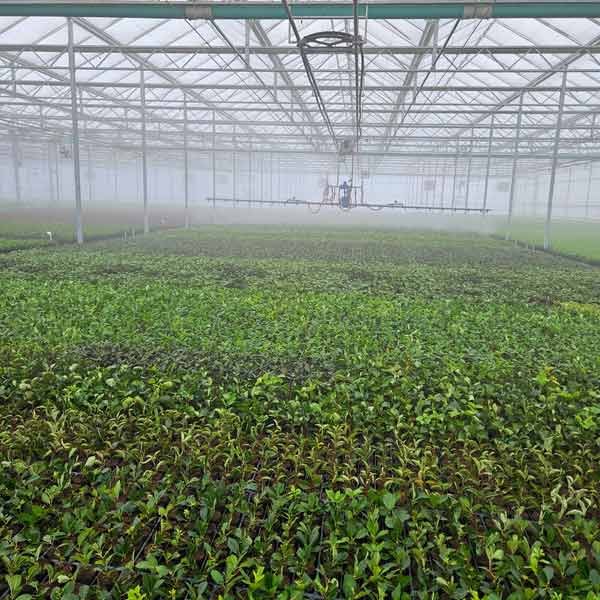
The Red Mill facility is located on a 22-acre site, with approximately 4 acres currently developed. This provides significant room for future expansion as Petitti continues to grow and modernize its operations. Petitti invested in high-capacity robotic sticking machines capable of processing 4,000–4,500 cuttings per hour with machine-vision accuracy, ensuring speed, consistency and uniformity in propagation.
Petitti is the only nursery in the U.S. with a dual Ellepot setup, producing plugs from 50-count air trays up to 6-count trays. This flexibility allows the company to optimize liner formats for different crop needs, leading to stronger transplants and faster finishing in containers and the field.
Joe Allio, president, Petitti Family Farms said, “Red Mill is about strengthening our foundation. By improving our own liners, we’re able to grow better crops, finish them faster, and operate more efficiently across all of our farms.”